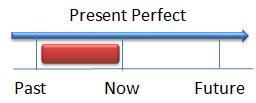
Perfect tense
The structure of the present perfect in English is:
[SUBJECT] + have / has + [participle of the verb]
| Conjugación | Significado |
|---|---|
| I have played | yo he jugado |
| you have played | tú has jugado |
| he has played | él ha jugado |
| we have played | nosotros hemos jugado |
| you have played | vosotros habéis jugado |
| they have played | ellos han jugado |
As you can see the auxiliary "it has" used in the third person singular and auxilar "have" in other cases.
Construction of the participle
Regular verbs form the participle "-ed" is added.
play➜played
But must take into account some considerations:
irregular verbs
For irregular verbs must be memorized his way past participle.
| Verbo | Participio | Significado |
|---|---|---|
| to go | gone | ir |
| to make | made | hacer |
Participle verbs in "-e"
Regular verbs ending with "-e" participle form its simply adding a "d".
| Verbo | Participio | Significado |
|---|---|---|
| used | usar | |
| excused | disculpar |
Negation in the present perfect
Negation in the present perfect does not have any complications. Its structure is simply:
[SUBJECT] + have / has + not + [verb participle]
He has not played well
Él no ha jugado bien
I have not eaten in 2 days
(Yo) no he comido en 2 días
The question in the present perfect
The question is constructed by reversing the order of subject and verb to have. That is to say:
Have / has + [SUBJECT] + [verb participle]?
| Conjugación | Significado |
|---|---|
| have I done? | ¿he hecho? |
| have you done? | ¿has hecho? |
| has he done? | ¿he hecho? |
| have we done? | ¿hemos hecho? |
| have you done? | ¿habéis hecho? |
| have they done? | ¿han hecho? |
If prayer had an interrogative particle form would be:
[Interrogative particle] + have + [SUBJECT] + [verb participle]?
What have you done?
¿Qué has hecho?
Using the present perfect
The present perfect is used to:
Actions that began in the past and have not finished in this
I have not slept in the past two days
No he dormido en los últimos 2 días
I am not hungry Because I have eaten an apple
I'm not hungry because I've eaten an apple
The nuance of the above example is that although we have finished eating the apple, this action has an impact on the present (not hungry at present for having eaten the apple)
I have bought a car
(I) I bought a car
The nuance of this second example is that although the act of buying over, the car still belongs to us in the present (continuous effect of the action).
Exercise
http://www.inglessencillo.com/presente-perfecto

No hay comentarios.:
Publicar un comentario