jueves, 4 de junio de 2015

Tags Questions

The tag questions are short phrases or questions (mini-questions) which is placed at the end of an affirmative or negative sentence and generally aim to confirm or deny the content of the phrase itself.It is equivalent to it? Spanish or no? most used in Latin.


.
THREE BASIC RULES YOU SHOULD REMEMBER
1.
The tag questions always use auxiliary verbs.
2.
With affirmative sentences use a tag question negative.
3.
With negative sentences use a tag question in the affirmative or positive.
Let us now analyze the different alternatives that may arise:


a) Affirmative sentences with the verb TO BE IN PRESENT SIMPLE OR CONTINUOUS.
The same form of the verb is used in NEGATIVE: are not you? is not he? is not she? is not it? are not we? are not you? They are not? Here are some examples:
It's a beautiful day, isn't it? (Es un día hermoso, ¿no?)Martha is angry, isn't she? (Marta está enojada, ¿verdad?)You are really tired, aren't you? (Estás muy cansado, ¿no?)They're very nice people, aren't they? (Son personas muy agradables, ¿no?)You are coming tomorrow, aren't you? (Vas a venir mañana, ¿verdad?)Pedro's flying now, isn't he? (Pedro está volando en estos momentos, ¿no?)
Please remember that in American English and only in this particular case, for the first person of the verb to be used are not I? as I am not equivalent ?:
I'm late, aren't I? (Llego tarde, ¿no?)I'm arriving late at night, aren't I? (LLegaré tarde por la noche, ¿no?)
b) Negative sentences with the verb TO BE IN PRESENT SIMPLE OR CONTINUOUS.
I am: the same form of the verb in the affirmative or positive is used? are you? is he? is she? is it? are we? are you? are they? Here are some examples
I'm not late, am I? (No llego tarde, ¿no?)It isn't a beautiful day, is it? (No es un día hermoso, ¿verdad?)Martha isn't angry, is she? (Marta no está enojada, ¿no?)You aren't really tired, are you? (No estás muy cansado, ¿verdad?)They aren't very nice people, are they? (No son personas muy agradables, ¿no?)You aren't coming tomorrow, are you? (No vas a venir mañana, ¿no?)Pedro isn't flying now, is he? (Pedro no está volando en estos momentos, ¿no?)
c) Affirmative sentences with the verb TO BE IN SINGLE OR CONTINUOUS PAST.
The same form of the verb is used in NEGATIVE: was not I? Were not you? was not he? was not she? was not it? Were not we? Were not you? Were not They? Here are some examples:
It was a beautiful day, wasn't it? (Fue un día hermoso, ¿verdad?)Martha was angry, wasn't she? (Marta estaba enojada, ¿no?)You were really tired, weren't you? (Estabas muy cansado, ¿verdad?)You were studying at 6, weren't you? (Estuviste estudiando a las 6, ¿no?)He was flying when I phoned, wasn't he? (Estaba volando cuando llamé, ¿no?)

Continuous Future

Conjugation of continuous future


Construction of continuous future progressive in English is:

SUBJECT + will be + verb-ing TERMINATION (gerund)


ConjugaciónSignificado
yo estaré caminando
tú estarás caminando
él estará caminando
nosotros estaremos caminando
vosotros estáis caminando
ellos estarán caminando

The denial continued future

For denial, just the adverb "not" after the auxiliary verb "will" is added:

structure:

Will not be subject + verb + gerund


yo no estaré trabajando la semana que viene

Tom no estará jugando este domingo

The Interrogation


As in the rest of tenses, the question is constructed by reversing the order of subject and auxiliary verb "will":

SUBJECT + will be + gerund

will you be studying tomorrow?
¿estarás estudiando mañana?


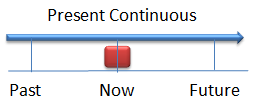
Presente Continuos

Conjugation of the present continuous

The structure of the present continuous (Present Continuous) in English is simple:

[SUBJECT] + am / are / is (verb to be) + [verb ING (gerund)]

ejemplo presente continuo

ConjugaciónSignificado
I am singingyo estoy cantando
you are singingtú estás cantando
he is singingél está cantando
we are singingnosotros estamos cantando
you are singingvosotros estáis cantando
they are singingellos están cantando

Construction of the gerund

As a general rule to form the gerund in English "-ing" is added.

But must take into account some considerations:

Gerund verbs ending in -ie

Completion "-ie" with "ying" is replaced.


VerboGerundio
diedying
lielying
Gerund verbs ending in -e

The "-e" final is replaced by "-ing"


VerboGerundio
useusing
havehaving
Bending of the final consonant in the formation of the gerund

Many double their consonant verbs to formally end the gerund:

VerboGerundio
getgetting
setsetting
forbidforbidding
So that the bending is made you will have to meet these three conditions:

The word ends in a single consonant (other than r, w, x or y) [example: set]
The last consonant is preceded by a single vowel. [example: let]
The word is monosyllabic or the accent falls on the last syllable or word ending in "L"

The negation in the Present Continuous


Negation with full verbs (ie no manners and no auxiliary) is very simple:

[SUBJECT] + am / are / is (verb "to be") + not + [verb ING (gerund)]


yo no estoy cantando

él no está cantando

The question in the present continuous


To construct the question you just have to reverse the order of subject and verb to be:

Structure of the question:

am / are / is + [SUBJECT] + [verb "-ing"]?


ConjugaciónSignificado
am I singing?¿estoy cantando?
are you singing?¿estás cantando?
is he singing?¿está cantando?
are we singing?¿estamos cantando?
are you singing?¿estáis cantando?
are they singing?¿están cantando?

presente continuo


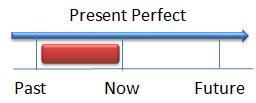
Present perfect

presente perfecto

Perfect tense

The structure of the present perfect in English is:

[SUBJECT] + have / has + [participle of the verb]

ConjugaciónSignificado
I have playedyo he jugado
you have playedtú has jugado
he has playedél ha jugado
we have playednosotros hemos jugado
you have playedvosotros habéis jugado
they have playedellos han jugado

As you can see the auxiliary "it has" used in the third person singular and auxilar "have" in other cases.

Construction of the participle

Regular verbs form the participle "-ed" is added.

playplayed


But must take into account some considerations:

irregular verbs

For irregular verbs must be memorized his way past participle.

VerboParticipioSignificado
to gogoneir
to makemadehacer
Participle verbs in "-e"

Regular verbs ending with "-e" participle form its simply adding a "d".

VerboParticipioSignificado
usedusar
excuseddisculpar
Negation in the present perfect

Negation in the present perfect does not have any complications. Its structure is simply:

[SUBJECT] + have / has + not + [verb participle]
         
         He has not played well
Él no ha jugado bien

I have not eaten in 2 days
(Yo) no he comido en 2 días


The question in the present perfect

The question is constructed by reversing the order of subject and verb to have. That is to say:

Have / has + [SUBJECT] + [verb participle]?

ConjugaciónSignificado
have I done?¿he hecho?
have you done?¿has hecho?
has he done?¿he hecho?
have we done?¿hemos hecho?
have you done?¿habéis hecho?
have they done?¿han hecho?

If prayer had an interrogative particle form would be:

[Interrogative particle] + have + [SUBJECT] + [verb participle]?


What have you done?
¿Qué has hecho?


Using the present perfect


The present perfect is used to:

Actions that began in the past and have not finished in this

I have not slept in the past two days
No he dormido en los últimos 2 días

Actions that began and ended in the past but continues its effect on the present.
I am not hungry Because I have eaten an apple
I'm not hungry because I've eaten an apple

The nuance of the above example is that although we have finished eating the apple, this action has an impact on the present (not hungry at present for having eaten the apple)

I have bought a car
(I) I bought a car

The nuance of this second example is that although the act of buying over, the car still belongs to us in the present (continuous effect of the action).

Exercise

http://www.inglessencillo.com/presente-perfecto

Past Continuous


Conjugation of the past continuous

The structure of the Past Continuous (Past Continuous Tense) is:


[SUBJECT] + was / were + [verb ending -ing (gerund)]

ConjugaciónSignificado
yo estaba trabajando
tú estabas trabajando
él estaba trabajando
nosotros estábamos trabajando
vosotros estabais trabajando
ellos estaban trabajando

Negation in the past continuous

Negation is formed by simply adding the adverb "not" from the verb "to be" (was / were) and the main verb of the sentence:

structure:

[SUBJECT] + was / were not + [verb the -ing (gerund)]

          I was not singing
yo no estaba cantando
he was not singing
él no estaba cantando

The interrogation continued past

To construct the question just the verb "to be" and the subject is reversed:
Structure of the question:

was / were + [SUBJECT] + [verb the -ing (gerund)]?

ConjugaciónSignificado
was I singing?¿estaba cantando?
were you singing?¿estabas cantando?
was he singing?¿estaba cantando?
were we singing?¿estábamos cantando?
were you singing?¿estabais cantando?
were they singing?¿estaban cantando?
If the question had an interrogative particle structure would

[Interrogative particle] + was / were + [SUBJECT] + [verb the -ing (gerund)]

What were you singing?
¿Qué estabas cantando?

Using the past continuous

The "past continuous" is used to:

Actions that began in the past and want to stress that had a certain duration.

I was eating an apple, when I fell to the ground
Me estaba comiendo una manzana cuando caí al suelo

In the above example the past continuous is used to describe the action of eating the apple he had a certain length but the drop was instantaneous.

Exercise Past Continuos

Past Simple


The structure of "simple past" (Simple Past Tense) in English is:

Resultado de imagen para formulario de tiempos en ingles past simple
 The structure of "simpe past" (Simple Past Tense) in English is:
[SUBJECT] + [past tense, ending "-ed"]


ConjugaciónSignificado
yo trabajé
tú trabajaste
él trabajó
nosotros trabajamos
vosotros trabajasteis
ellos trabajaron
Construction of the past

In general, to form the past in English, "-ed" is added to a verb.

But must take into account some considerations:

irregular verbs

For irregular verbs must be memorized his way past.

we show some examples of irregular verbs:

VerboPasadoSignificado
to gowentir
to buyboughtcomprar
to havehadtener
to bewas/wereser o estar

Fui a la universidad de Oxford

Past verbs ending in "-e"

To form the past the "-e" final is replaced by "-ed".

VerboPasado
useused
diedied
Negation in pasast simple

The formation of negation in "simple past" is simpler than affirmation.

Its structure is:

[SUBJECT] + did + not + [infinitive (without to)]

We show you a couple of examples:


yo no canté

él no cantó

The question in the simple past

To construct the question the auxiliary verb to do is used in the past (did).

The structure is:

Did + [SUBJECT] + [infinitive (without to)]?

ConjugaciónSignificado
did I sing?¿canté?
did you sing?¿cantaste?
did he sing?¿cantó?
did we sing?¿cantamos?
did you sing?¿cantasteis?
did they sing?¿cantaron?
If the question had an interrogative particle structure would

[Interrogative particle] + did + [SUBJECT] + [infinitive]?

What did you sing?
¿Qué cantaste?

Using the simple past

The "simple past" is used to:

Actions that began in the past and are now complete.

I ate an apple yesterday
Me comí una manzana ayer


jueves, 28 de mayo de 2015

Present Simple (Presente simple)

FORM

To conjugate the present simple to use the inifinitivo subjects "I", "you", "we" and "they" and another for "he", "she" and "it", we added a "-s" to end of the verb.

Ejemplo de estructura del Formulario de Tiempos en Ingles

SubjectConjugation
I, You, We, Theytalk, eat, learn, watch, do, go...
He, She, Ittalks, eats, learns, watches, does, goes...

Structure (Estructura)

  1. Affirmative Sentences (Frases afirmativas)
    StructureSubject + Main verb.
    • Examples:
    • talk. (Yo hablo.)
    • He eats. (Él come.)
    • They learn(Ellos aprenden.)
  2. Negative Sentences (Frases negativas)
    StructureSubject + auxiliary verb ("to do") + negative assistant ("not") + main verb.
    • Examples:
    • do not [don't] talk. (Yo no hablo.)
    • He does not [doesn't] eat. (Él no come.)
    • They do not [don't] learn. (Ellos no aprenden.)
  3. Interrogative Sentences (Frases interrogativas)
    StructureAuxiliary Verb ("to do") + subject+ main verb
    • Examples:
    • Do you talk? (¿Hablas tú?)
    • Does he eat? (¿Come él?)
    • Do they learn? (¿Aprenden ellos?)

Uses (Usos)

1. The simple present is used to talk about things that usually happen. Unlike the Spanish, the simple present is not used to talk about something that is happening at the moment in which we speak.

It is typically used with the present simple adverbs of time:
always (siempre),
 every day (cada día),
usually (normalmente),
often (a menudo),
sometimes (a veces),
rarely (raramente),
hardly ever (casi nunca),
never (nunca)...
  • Examples:
  •  I always talk to my mother on Sundays. (Siempre hablo con mi madre los domingos.)
  • He never eats vegetables. (Nunca come las verduras.)
  • They learn something new in class.They usually learn something new in class. (Normalmente aprenden algo nuevo en la clase.)
Excepción:
Time adverbs go before the verb, except the verb "to be" (ser / estar). When "to be" used the verb goes before the adverb.
  • Examples:
  • am always happy. (Siempre estoy contento.)
  • He is often sick. (A menudo él está enfermo.)
  • They are rarely late. (En raras ocasiones llegan tarde.)
2. It is used to speak in generalities or scientific facts.
  • Examples:
  • He does not [doesn't] eat vegetables. (Él no come verduras.)
  • She works in a hospital. (Ella trabaja en una hospital.)
  • Elephants live in Africa. (Los elefantes viven en África.)
  •  Bogota is in Colombia. (Bogotá está en Colombia.)
  • Do children like animals? (¿Les gustan a los niños los animales?)
  • Adults do not [don't] know everything. (Los adultos no lo saben todo.)
3. It is used for events scheduled in the near future.
  • Examples:
  • The train leaves at 10:00. (El tren sale a las 10h.)
  • The party is tonight. (La fiesta es esta noche.)
  • Does the festival start tomorrow? (¿Empieza el festival mañana?)
  • The plane does not [doesn't] arrive today. (El avión no llega hoy.)
4. Used for instructions (imperative).
  • Ejemplos:
  • Open the window. (Abre la ventana.)
  • Eat the vegetables. (Come las verduras.)
  • Don't cry(No llores.)
  • Do your homework. (Haz los deberes.)
  • Call your mother. (Llama a tu madre.)